Monday, January 24, 2011

High Price for India’s Information Law

The New York Times
  • January 22, 2011

    High Price for India’s Information Law


    Lynsey Addario for The New York Times

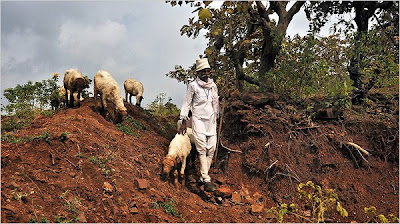
    A man herded sheep on land in the Gir Forest that had been torn up by illegal limestone mining.

    KODINAR, India -- Amit Jethwa had just left his lawyer's office after discussing a lawsuit he had filed to stop an illicit limestone quarry with ties to powerful local politicians. That is when the assassins struck, speeding out of the darkness on a roaring motorbike, pistols blazing. He died on the spot, blood pouring from his mouth and nose. He was 38.

    Related

    Mr. Jethwa was one of millions of Indians who had embraced the country's five-year-old Right to Information Act, which allows citizens to demand almost any government information. People use the law to stop petty corruption and to solve their most basic problems, like getting access to subsidized food for the poor or a government pension without having to pay a bribe, or determining whether government doctors and teachers are actually showing up for work.

    But activists like Mr. Jethwa who have tried to push such disclosures further -- making pointed inquiries at the dangerous intersection of high-stakes business and power politics -- have paid a heavy price. Perhaps a dozen have been killed since 2005, when the law was enacted, and countless others have been beaten and harassed.

    In many of these cases, the information requested involved allegations of corruption and collusion between politicians and big-money business.

    "Now that power people are realizing the power of the right to information, there is a backlash," said Amitabh Thakur, an activist and police official who is writing a book about people killed for demanding information under the law. "It has become dangerous."

    India may be the world's largest democracy, but it remains dogged by the twin legacies of feudalism and colonialism, which have often meant that citizens are treated like subjects. Officials who are meant to serve them often act more like feudal lords than representatives of the people.

    The law was intended to be a much-needed leveler between the governors and the governed. In many ways it has worked, giving citizens the power to demand a measure of accountability from bureaucrats and politicians.

    When the law was passed, Mr. Jethwa, a longtime activist who nursed a lifelong grudge against those who abused official power, immediately seized upon it as a powerful new tool.

    His objective was to stop illegal quarries near the Gir National Park, 550 square miles of scrubland and deciduous forest near his hometown, along the southern coast of Gujarat, India's most prosperous state. The preserve is the only remaining habitat of the rare Asiatic lion. The animal is featured on the national emblem of India, and is considered by Hindus to be a sacred incarnation of Lord Vishnu.

    But the forest sits in a mineral-rich area of coastal Gujarat dotted with cement factories that churn out building materials to fuel India's near double-digit economic growth. The limestone that lies just beneath the soil in and around the Gir Forest is an ideal component of cement. By law, the forest and a three-mile boundary around it are off limits to all mining activity. But quarries the size of several football fields have been cut deep into the earth in the protected zone.

    This mining has had serious consequences not only for the forest preserve, but also for water used for drinking and farming. The thirsty limestone is a natural barrier between seawater and fresh groundwater. A recent state government report concluded that limestone mining had allowed seawater to flow into the aquifer, causing an "irreversible loss."

    Balu Bhai Socha, an environmental advocate who worked with Mr. Jethwa, said the pace of mining rapidly increased as the local economy boomed.

    "The speed with which the illegal mining was going on, we realized, within 10 years they will clean out the whole forest," Mr. Socha said.

    Mr. Jethwa repeatedly filed information requests to unearth the names of those operating the quarries and to see what action had been taken against them. He discovered there were 55 illegal quarries in and around the preserve. One name stood out among the records of land leases, electricity bills and inspection reports: Dinubhai Solanki, a powerful member of Parliament from the Bharatiya Janata Party, which governs Gujarat.

    Mr. Solanki, who had risen from the State Legislature to Parliament, was a local kingmaker and an imperious presence. He had the backing of the local police and bureaucrats, activists here said. Mr. Jethwa and many others suspected that he was the mastermind and principal beneficiary of the illegal mining operation.

    In February 2008, Mr. Jethwa was attacked by a gang of men on motorbikes. He was beaten so badly that he had to be hospitalized. He immediately suspected Mr. Solanki.

    "If someone attacks me, or kills me in an accident, if my body is injured -- for these acts the Kodinar MLA Dinu Solanki will be responsible," he wrote in a letter to Gujarat's chief minister, Narendra Modi, after the attack.

    His father begged him to stop.

    "I cautioned him several times about the danger," the elder Mr. Jethwa said. "But he used to say: 'Forget that you have three sons and say you have two sons. Let me do my work.' He would say, 'My religion is rule of law.' "

    Lynsey Addario for The New York Times

    Balu Bhai Socha, an environmental advocate, said that he now thought twice before challenging powerful interests and that he wondered if the risks were worth it.

    Related

    Lynsey Addario for The New York Times

    Bhikhu Jethwa sifts through photographs of his son, Amit, who was killed after filing a lawsuit to stop an illicit, multimillion-dollar limestone mine run by powerful local politicians.

    Mr. Jethwa's information requests found sheaves of correspondence between forestry officials and local bureaucrats showing that despite repeated efforts to shut down the quarries, the practice continued.

    By last June, he felt that he had amassed enough evidence to file a lawsuit to stop the mining. He filed the papers on June 28. On July 20, late at night, he was gunned down, leaving behind a wife and two children.

    Because of his activism and the place where he died, practically on the doorstep of the state high court, political pressure forced an unusually swift investigation. Detectives used cellphone records to link Shiva Solanki, the nephew of Dinubhai Solanki, to the killing, and he has been charged with conspiracy and murder. He is accused of hiring a contract killer to murder Mr. Jethwa.

    But few people believe that Shiva Solanki, who works for his uncle, could have carried out and paid for a contract killing on his own.

    Anand Yagnik, a prominent human rights lawyer in Gujarat, said that the police had made no effort to investigate Mr. Solanki.

    "The message that has gone out is that if you resort to your right to information to try to harass a political person, even after your murder, that man will go scot-free," Mr. Yagnik said, seated below a portrait of Gandhi in his basement law office in Ahmedabad.

    The police did not respond to repeated requests for comment on the investigation into Mr. Jethwa's death. Mr. Solanki told reporters at his office here that because the case was under investigation he would not answer questions.

    "You are welcome to sit here, have a cup of tea," he said. "I will not say a word."

    Mr. Jethwa's death has sent a chill through the community of activists here. Mr. Socha, the environmental activist, said that he now thought twice before challenging powerful interests and that he wondered if the risks were worth it.

    "Our hearts are broken after his death," Mr. Socha said. "You cannot fix the system. Everybody is getting money. If I give my life, what is the point?"

    Thursday, December 9, 2010

    RTI activist Amit Jethwa was posthumously given a special jury award


    Let's not forget resources are finite: President

    The Hindu President Pratibha Patil presents the NDTV special jury award for RTI activist Amit Jethwa (posthumous), to his wife Alpa Jethwa in New Delhi on Tuesday. Photo: Sandeep Saxena

    “Are we striking at the very roots of our sustenance?”

    Stressing the need for prudent management of the planet's resources, President Pratibha Patil on Tuesday warned that rapacious hunger could fast diminish them, and reduce space for nature and various life forms it supports.

    “The manner in which we are consuming we seem to have forgotten that many resources are finite. Are we striking at the very roots of our sustenance? Our unrelenting withdrawal of the earth's resources has adverse impacts on the earth itself. If not, such a study should be undertaken. Our generational responsibility also demands that we do not consume in a manner that we leave a depleted legacy for our children and grandchildren. We should use resources economically and optimally by consciously adopting practices that are environmental friendly and avoid wastage.”

    The President was speaking at the presentation of NDTV environment awards, “The Greenies,” here.

    Referring to the Roshni programme she has undertaken on the Presidential Estate, Ms. Patil said it was meant to foster a sustainable habitat. “The initiative has waste management, energy efficiency and usage of new and renewable energy as essential components. The effort was to create awareness and a sense of involvement in each individual living in the Estate in managing our environs in a responsible manner. We must create awareness of environment in both urban and rural areas. It should be discussed in Panchayati Raj institutions, municipal bodies and the NGOs.”

    Pointing out that India needed international backing in its endeavour for ecological sustainable development, Ms. Patil said the international community should collectively support the efforts of developing countries through financial resources and technology transfer.

    In a live interaction with Bollywood actor Priyanka Chopra, who was one of the anchors, Minister of State for Environment Jairam Ramesh, speaking from Cancun, asserted that India was a problem solver and bridge to narrow differences between contending parties. The Minister was given an award for his commendable work on the environmental front.

    Making it clear that he did not have much hope from the Cancun climate change summit, Union Minister for New and Renewable Energy Farooq Abdullah said India should save energy and take green initiatives on its own. “People want to make a difference. We have got to make solar energy cheaper so that we can have it in all our homes. It is a big task but we have to fulfil it.”

    Earlier, NDTV chairman Prannoy Roy said the President had put her stamp of approval on people (award winners) who were playing a crucial role in the future of the country.

    The Lifetime Achievement Award was presented to Veer Bhadra Mishra for creating awareness of the threats posed to the Ganga. The Best Green celebrity award was presented to Bollywood actor John Abraham. RTI activist Amit Jethwa was posthumously given a special jury award for exposing illegal mining in the Gir forest in Gujarat. There were winners from different fields in other categories.

    Tuesday, October 26, 2010

    Amit jethwa's last SMS on my mobile phone.

    Amit jethwa's last SMS on my mobile phone.

    Thursday, February 4, 2010

    Cheetahs fall ill at Sakkar Baug Zoo in Junagadh, removed from public view

    Cheetahs fall ill at Sakkar Baug Zoo in Junagadh, removed from public view


    Express News Service Posted online: Tuesday , Feb 02, 2010 at 0537 hrs
    Rajkot : Sakkar baug Zoo in Junagadh, which has the distinction of housing two pairs of African Cheetahs, has removed the felines from public view due to illness.

    The animals have been put under critical care for the second time since their arrival from Singapore in March 2009. Zoo officials said on Monday that three of the four cheetahs — a male and two females— have taken ill, and that the condition of one of them is critical.

    Zoo Superintendent Y J Rana said the animals have developed infection in the respiratory system and swelling in the liver. Besides local veterinarians, an expert from Anand has been called in. They are also in constant touch with experts from the Singapore Zoo.

    Sources, meanwhile, said that two cheetahs have responded well to the treatment and have reportedly started taking food, while one has not taken food for the last two days.

    The state government had brought the four felines from Singapore in exchange of three Asiatic lions. To take proper care of the animals, zoo officials were imparted training in Africa and Singapore.

    Thursday, October 8, 2009

    Gir National Park – Home of the Asiatic Lion!!

    Gir National Park – Home of the Asiatic Lion!!

    Sunday, 4 October, 2009

    Of days gone by...this January during my solo all India motorcycle journey
    Gir National Park, which is the only abode of the rare Asiatic lion is situated in the south west of the Saurashtra peninsula. The Gir forest, stretching over an expanse of 1,412 sq km, is one of the largest tracts of dry deciduous forests in the world. The entire landscape is drained by seven perennial rivers. A large chunk of the forest land falls under what is known as the Deccan trap, one of the largest volcanic provinces in the world. Thanks to volcanic rocks, the area has black cotton soil and sandstone. After relaxing a couple of days at Diu, I took sparsely populated country roads to reach Sasan Gir to begin my tour of the world of the rare Asiatic lion. Sasan Gir is a dusty and badly managed one-road stretch where most of the hotels and restaurants do business. The buses and the fish carts run chaos here. But, since I was here to enjoy the exotic wildlife here, I tried to forget my dusty surroundings and checked into the budget hotel “Rajashri Guest House’ that is opposite the Sinh Sadan Guest House, the forest department run tourism centre. During my 3 day stay here, I took 3 morning and 2 evening safaris into different parts of the Gir Jungle. One can get their entry tickets, book their forest guides and book the jungle safaris at the reception desk in the Sinh Sadan Guest House. A lot of tourist guides here are of African origin and they share the buffer zone of the Gir forests with the lions and the other jungle denizens. As history goes, the Nawab of Junagadh ordered a lot of slaves from Africa during his merry days. Today, these folks are as much an Indian citizen as the rest of India and enjoy the privileges that the Indian citizenship offers. Having been in India for generations, these guys speak Hindi and Gujarati fluently, but still retain their native dialects and scripts. Recently, these folks of African origin


    were made popular by the Bajaj Discover TV advertisement. Each jungle safari offered me sights of different breathtaking beauties and thus added variety in spice. It was the very first morning safari (Route 5) and I was just 15 minutes into our drive when I spotted 2 male Asiatic lions (brothers) slowly ambling in front of the jeep and on the soft ground. As we know, most of the felines have sensitive paws and thus prefer to walk on the soft mud-covered jeep tracks. I stood transfixed in my jeep admiring this proud and powerful species. I was hoping to hear them roar, but it looked like these lion brothers in front of me were happy to take a leisurely morning stroll. Locals here told me that an adult lion’s roar can be heard till as far away as 9 kilometres from the lion. Now isn’t that some mighty roar!! The Gir forest has an estimated 352 lions. But, the story here is that these 352 lions share the same gene pool as they were bred from less than 20 specimens. What this means is that a single epidemic, to which these lions are exposed could wipe out the species entirely! I went to different parts of this jungle. Whether it be dry scrub land (Route 5), yellow grass land (Route 6) or the green terrain near Kamleshwar dam, Gir is extremely rich in wildlife and is a birdwatcher’s paradise. The bold pride of lions, a jackal basking in the early morning golden sun, a crested serpent eagle (female) guarding its nest, the very exquisite looking painted sand grouse, the national bird of India – the peacock, a scampering ruddy mongoose, scores of nilgai, sambar deer, spotted deer and other birds is what I got to see at this amazing place. After my first morning trip where I spotted the lion brothers, I wasn’t able to sight any more of this rare beauty till my 5th and final jungle safari (Route 6). This happened to be the evening shift. It was late in the evening close to dusk hours when I spotted a lioness and her female cub. My forest guide told me that the female cub was no older than 2 years, but till date I doubt his judgement as I was awed at the sheer power that the female cub oozed even at such a young age. The overall wildlife experience was fabulous for me, but the only thing that pinched my heart were the umpteen smoke belching small scale industries that have propped up around the boundaries. These small scale industries not only increase the air and water pollution levels, but also bring in a larger population. Hopefully, the government will prevent the Gir forest and the pride of Gujarat from any further degradation. Following were the mammals I spotted during my 3 day stint here: Asiatic Lion, Asiatic Lioness and her cubs, Jackal, Ruddy Mongoose, Common Mongoose, Common Langaur, Nilgai (Bluebull), Spotted Deer (Chital), Sambar deer, and Wild Boar. Following were the birds I spotted during my 3 day stint here: Shikra, Blue cheeked bee eater, Peacock, White-breasted kingfisher, Rose-ringed parakeet, Asian Robin, Spotted Owlet, Common Buzzard, Oriental Tree Pipit, Rufus tree pie, Red Vented Bulbul, Red Wattled Lapwing, Darter, Small Blue Kingfisher, Indian Pond Heron, White-Breasted Kingfisher, Crested Serpent Eagle (female), Purple Sunbird, Oriental White Eye, Common Tailor Bird, Yellow Legged Green Pigeon, Little Cormorant, Common Babbler, Black Ibis, Little Egret, Eurasian thick knee, Painted Sand grouse and Little brown dove. To see India through the eyes of a motorcyclist’s lens, visit the album below.

    Saturday, July 4, 2009

    Will CM gift forest land to industry?


    Will CM gift forest land to industry?
    DNA By Kapil Dave
    In a major setback to decades of forest and wildlife conservation efforts in Gujarat, the state government may decide today to de-notify hundreds of hectares of forest land in four sanctuary areas of Gujarat. If chief minister Narendra Modi approves the Gujarat Wildlife Board's agenda, there will be a severe threat of industrial and human activity in Gujarat's four prime forest areas - the Wild Ass Sanctuary in the Little Rann of Kutch, Girnar Wildlife Sanctuary, Velavadar Black Buck Sanctuary and Narayan Sarovar Bird Sanctuary.

    Highly placed sources told DNA on Friday that influential industrial houses are likely to have their way if the forest department and the Board don't vehemently oppose the move. Highly placed sources expressed profound sorrow about the fact that "Gujarat's wildlife is facing major problems like poaching and increased human and industrial activity, but the Board is pressing for discussion on 11 issues, of which a majority are proposals of industries to take away forest land."

    The board has proposed diversion of 89.74 hectare land in the Wild Ass Sanctuary for the power transmission line of Adani Power Ltd and 241.59 hectare land for Power Grid Corporation's transmission lines. It has also proposed diversion of 7.28 hectare land for Usha Breco Ltd for ropeway construction in Girnar Sanctuary; 4.40 hectare land from Velavadar black buck Sanctuary for Gujarat State Road Development Corporation (GSRDC) for construction of a six-lane Sarkhej-Vataman-Bhavnagar central spine road; 0.315 ha land diversion for Bharat Sanchar Nigam Ltd for laying of fibre optic lines in Balaram-Ambaji Sanctuary, 0.45 ha land diversion for Vodafone Gujarat Limited for laying of fibre optics in Narayan Sarovar Sanctuary and 0.45 ha land diversion for Reliance Communication Gujarat Ltd in Narayan Sarovar Sanctuary.

    Ironically, the state government on Friday admitted in the assembly that because of increasingly serious man-animal conflict in Gir and Dangs forests, 23 people had lost their lives in the last two years. It also admitted during the ongoing assembly session to charges of misuse of land allotted in Gir.Highly placed sources in the government said, "The State Wildlife Board will hold a meeting, to be chaired by chief minister Narendra Modi, on July 4 at the Secretariat. The main agenda of the meeting is to give land in protected sanctuaries to various private companies for commercial use." The other items on the agenda include a presentation on wildlife, formation of Leo-genetic lab for Gir lions, modern communication facilities for the management and protection of the animals in Gir and erecting of walls on the two sides of the road in Gir sanctuary.

    However, the forest department prefers to remain quiet about the move to de-notify the forest land which it is supposed to protect! Principal chief conservator of forests ML Sharma was not reachable, while PCCF (wildlife) Pradeep Khanna refused to comment